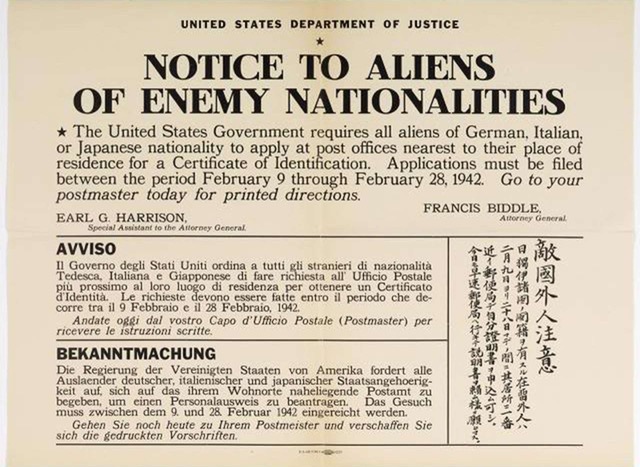
Sweltering temps have arrived in full force. Reminds me that eighty years ago, some American citizens had been ushered into poorly insulated camps to sweat out the summer. Taken from their homes in various areas of our country as potential enemy aliens and shipped to internment camps, they had no choice.
Years later, some government officials regretted these actions, especially in certain specific cases where very slim evidence led to arrests of innocent families and great hardship.
LAND THAT I LOVE addresses this historical situation that I discovered through my research for this novel. Of course, I knew about Japanese and Italian citizens forced from their homes and livelihoods. But who had heard of this occurring to German American citizens, as well?
Sometimes we uncover disheartening facts about the past–a camp specifically for German-American citizens sat deep in the heart of Texas. Imagine the heat these interned Americans endured! It’s good to understand the tensions people experienced during World War II, and to learn from the ways they coped.
If this bit of information intrigues you, I think you’d enjoy reading Land That I Love.
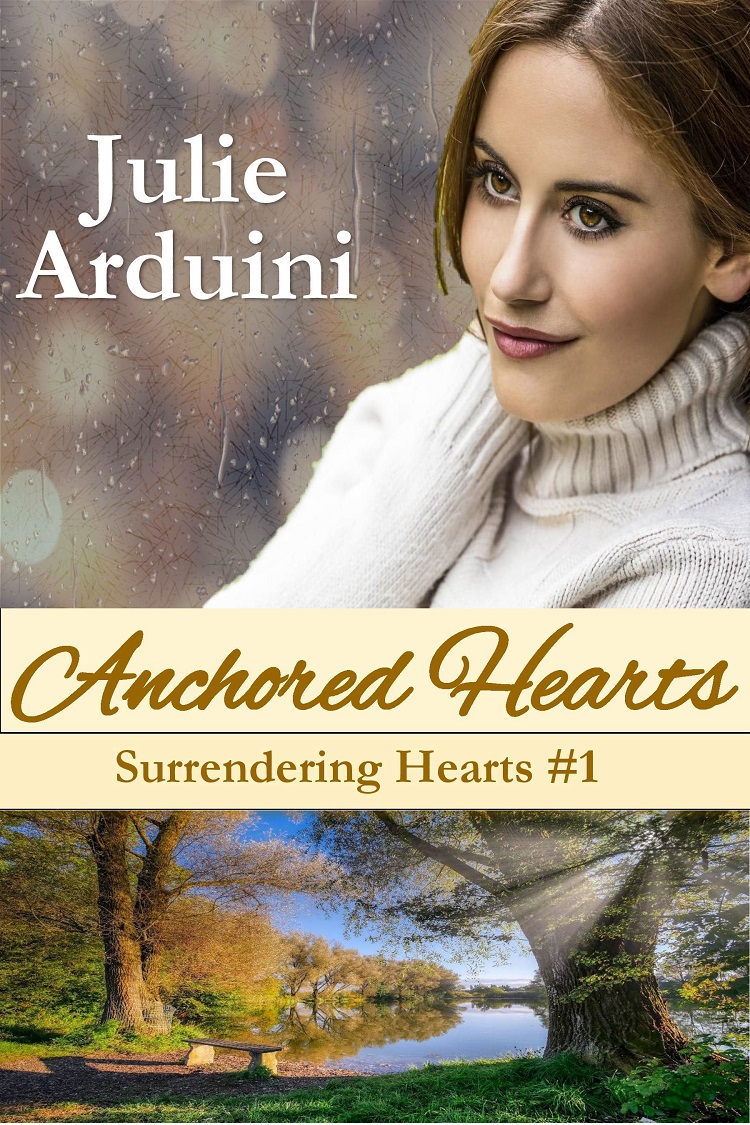
Julie Arduini has visited DARE TO BLOOM before, but this time, she’s really been industrious! She’s introducing a the first novel in her six-book Surrendering Hearts series. She shares her unique plot idea with us, and is offering a choice of a paperback copy or an e-book to a commenter here.
I enjoy hearing the inspiration behind new things. Couples and how they met. Employees and how they ended up in their career. Authors and how they came to the idea for their book. With my new release, Anchored Hearts, it’s quite the journey on how the book and series started.
My new series, Surrendering Hearts, revolves around the question, what if a family with a unique birth story stayed in the national spotlight because of tragedy? It took a while to come to that question, but it all started with a chat one day I had with my sister. We were talking about unique birth stories and she encouraged me to write about it. One idea we tossed around was about donor siblings. We also talked about multiples.
I followed the McCaughey septuplets since their birth and looked forward to the annual interview Ann Curry would host showing the world how the family was doing. When that conversation came with my sister, I thought about a fictional family of multiples.
From there, I considered how inspired and challenged I was watching This is Us. The writing fascinated me. How did they create such complex characters and span those decades? When that drama started, I wondered could I even attempt writing anything with a big family at the center?
It took years of starts and re-starts, but Surrendering Hearts is a fleshed-out six book series about the fictional Hart sextuplets from Upstate New York. Each sibling will get their own book to answer the question about the national spotlight. Each book will also show their quest to discover their own identity and find a love like the one their parents shared.
First up is Jordyn, the oldest and the one having a hard time giving up control. What happens when she has a new job and colleague who is just like her?
Can two go-getters surrender their need to control and find a happily-ever-after?
Jordyn Bell Hart succeeds in most everything she does. Her promotion to morning show co-anchor blossoms her career in the same way her mother’s work did. Jordyn keeps tabs on her family and enjoys helping them grow. When life around Jordyn starts to change, can she surrender her desire to control?
Spencer Collins knows how to balance a busy life. He has his work as a reporter, his time caregiving for his grieving father, and looking out for his little brother. When he learns he’s the new co-anchor of a morning show with Jordyn Hart, can he handle working with a celebrity who brings a lot of challenges to life on and off the set?
Julie Arduini loves to encourage readers to find freedom in Christ by surrendering the good, the bad, and —maybe one day—the chocolate. She’s the author of the new contemporary romance series SURRENDERING HEARTS (Anchored Hearts, Repairing Hearts, +four more.) Her other romance series is SURRENDERING TIME (Entrusted, Entangled, Engaged.) She also co-wrote a YA series with her daughter, SURRENDERING STINKIN’ THINKIN’ (You’re Beautiful, You’re Amazing, You’re Brilliant.) Her stand-alone romances include MATCH MADE IN HEAVEN and RESTORING CHRISTMAS. Julie maintains a blog at juliearduini.com and participates in the team blog Christians Read. She resides in Ohio with her husband and two children. Learn more by visiting her at http://linktr.ee/JulieArduini.
Julie Arduini loves to encourage readers to find freedom in Christ by surrendering the good, the bad, and —maybe one day—the chocolate. She’s the author of the new contemporary romance series SURRENDERING HEARTS (Anchored Hearts, Repairing Hearts, +four more.) Her other romance series is SURRENDERING TIME (Entrusted, Entangled, Engaged.) She also co-wrote a YA series with her daughter, SURRENDERING STINKIN’ THINKIN’ (You’re Beautiful, You’re Amazing, You’re Brilliant.) Her stand-alone romances include MATCH MADE IN HEAVEN and RESTORING CHRISTMAS. Julie maintains a blog at juliearduini.com and participates in the team blog Christians Read. She resides in Ohio with her husband and two children. Learn more by visiting her at http://linktr.ee/JulieArduini.
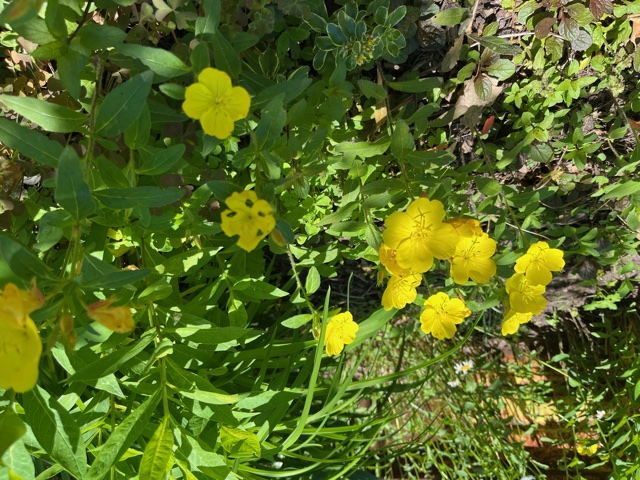
What could be prettier than primroses in the dappled shade of a cottage garden?
Just ask Keats or Byron or another Romantic poet . . .
My reply– nothing could be prettier.
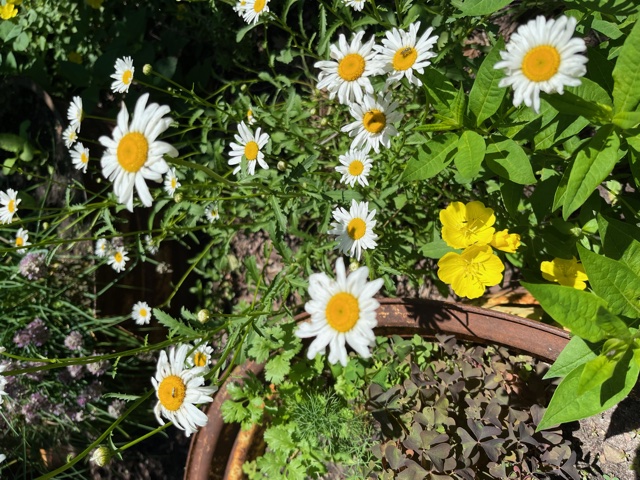
Or maybe primroses amidst a daisy patch?
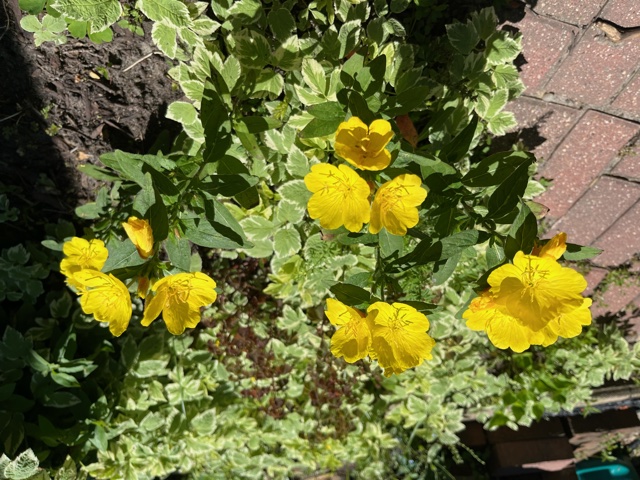
But then I spied these. Best of all would be primroses in bright sunlight that highlights the unique patina of each petal.
And there you have it, my inspiration for today. I’m editing for someone, and the manuscript’s adjectives, metaphors, and other colorful language brings the characters to life. That’s our goal, always–whether writing fiction or nonfiction.
So many nuances to each lovely, delicate primrose!
I don’t often feature Romance authors here, but am happy to welcome Judith McNees, because the story behind her novel touches me. She’s out to make a difference in this old world! Hope you enjoy A HEART TO CHERISH. AND Judith is offering a free e-book to one commenter here.
The first seeds for the character Julia in A Heart to Cherish began to form in my mind back in 2011 when my husband and I went through foster parent training. In one of the classes, we listened to a panel of foster parents and former foster youth talk about different aspects of the foster care system.
The thing that stuck out to me the most from that experience was hearing just how many children “age out” of foster care without being adopted. Perhaps I’d been naïve to think that, on the whole, the system was working. That day, my paradigm changed, and I realized that young people were leaving foster care by the thousands with no support system behind them.
Writing what I’m passionate about comes naturally, so when I got the stirring in my heart to write a novel last summer, having a character who was a former foster youth was an obvious choice for me. I wanted Julia to be a character who would show how heartbreaking it can be to grow up in this system but also leave my readers with a sense of hope. The love she experiences in her new “found family” helps her to grow beyond the loss and abandonment she went through many times over as an orphan and a foster child.
Just like Julia, it is very common for teens who “age out” of foster care to become homeless, and well over half of the girls become pregnant by the time they are twenty-one. Like Julia, more than half of them experience difficulties finding gainful employment by the time they are twenty-four. Though many of these teens report a desire to go on to college, as many as one quarter of them will fail to even graduate high school due to the number of times they have to switch schools as well as other problems that make it difficult to finish.
I’m very thankful for my own journey with foster care and adoption and the things I’ve learned along the way. It is my hope that, through Julia’s story, others will be encouraged to find their own ways to help as well.
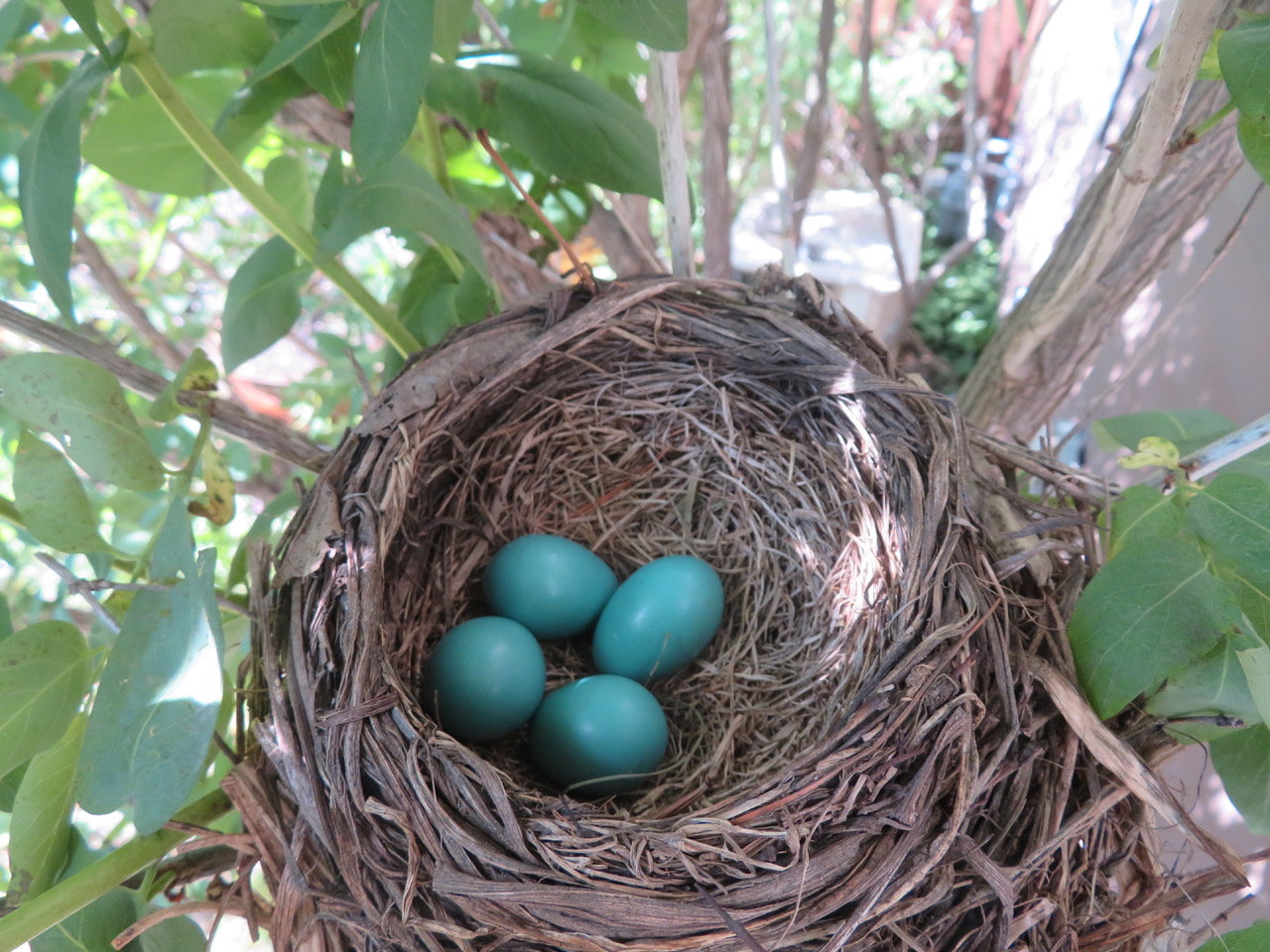
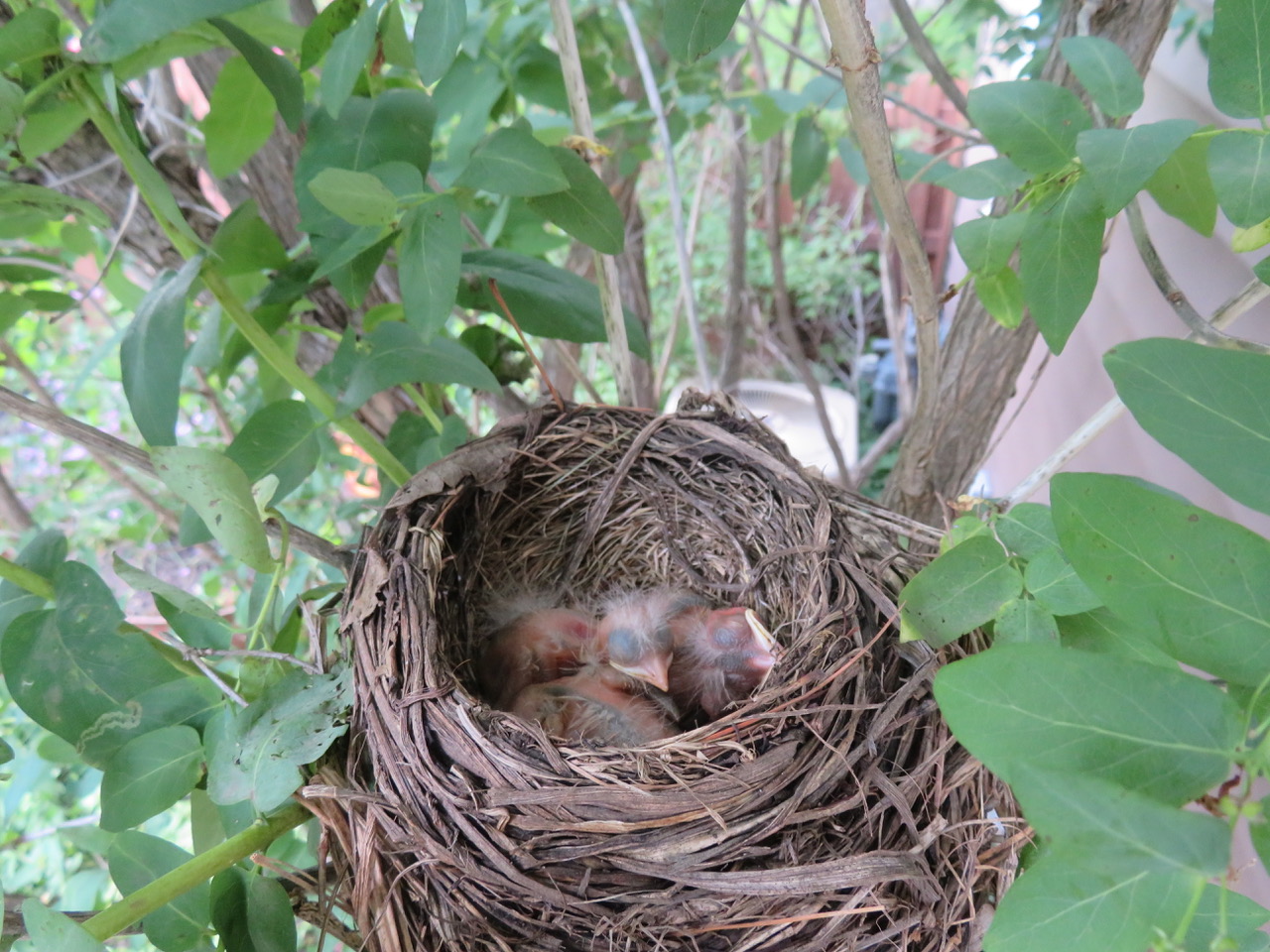
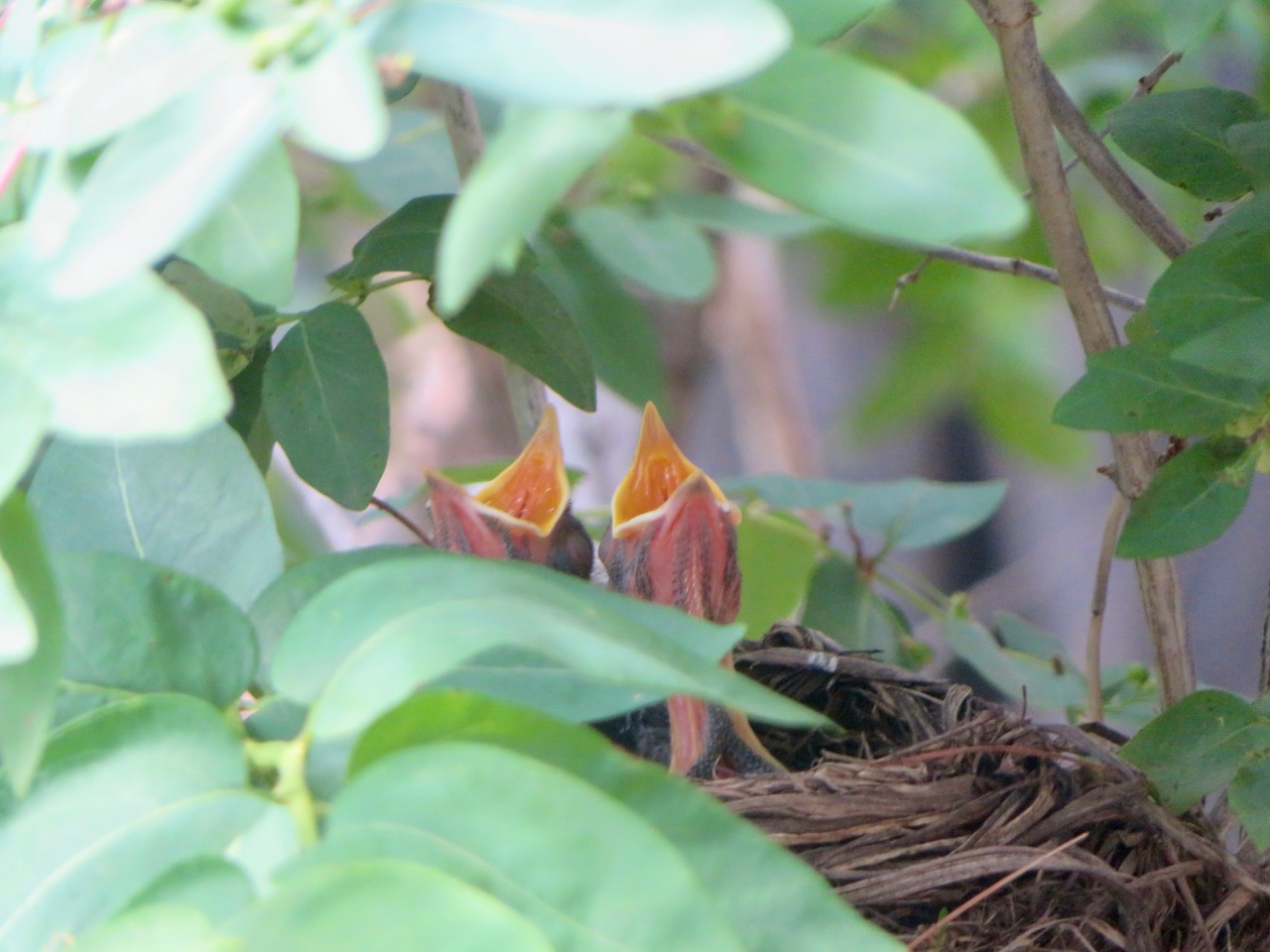
This spring, our perfect view of a robin’s nest has been so instructive.
It all began with building this nest, quite a task, resulting in a work of art. Then four lovely eggs appeared and the second phase of Mama Robin’s work began.
She exhibited great patience, sitting for days that turned into weeks, rarely leaving her post. Did she miss flying? Did she long to be off and about?
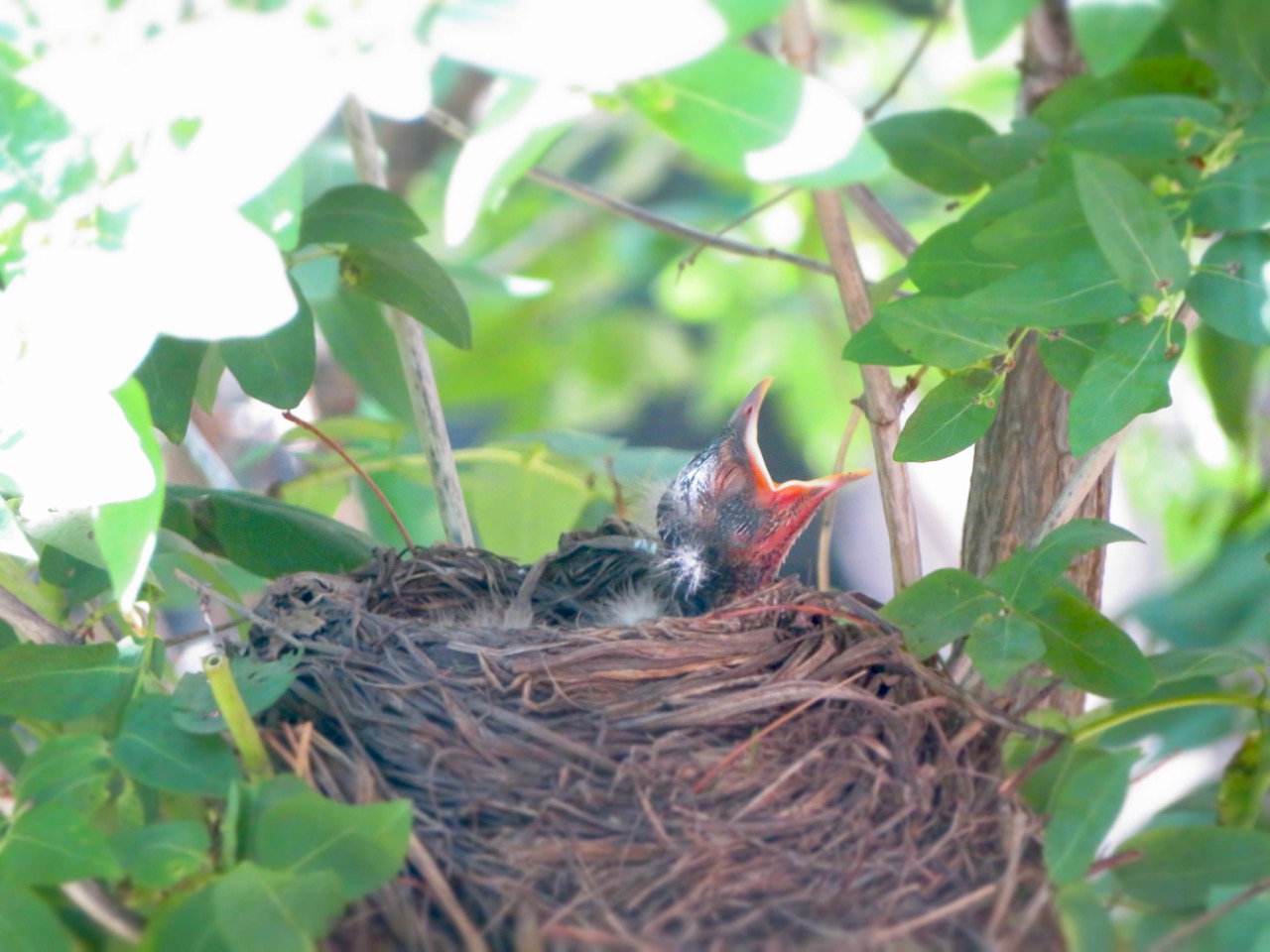
Then one day, everything changes as the chicks hatch. Still more waiting now, for them to gain strength to lift their heads and hold their mouths open in a silent cry for food.
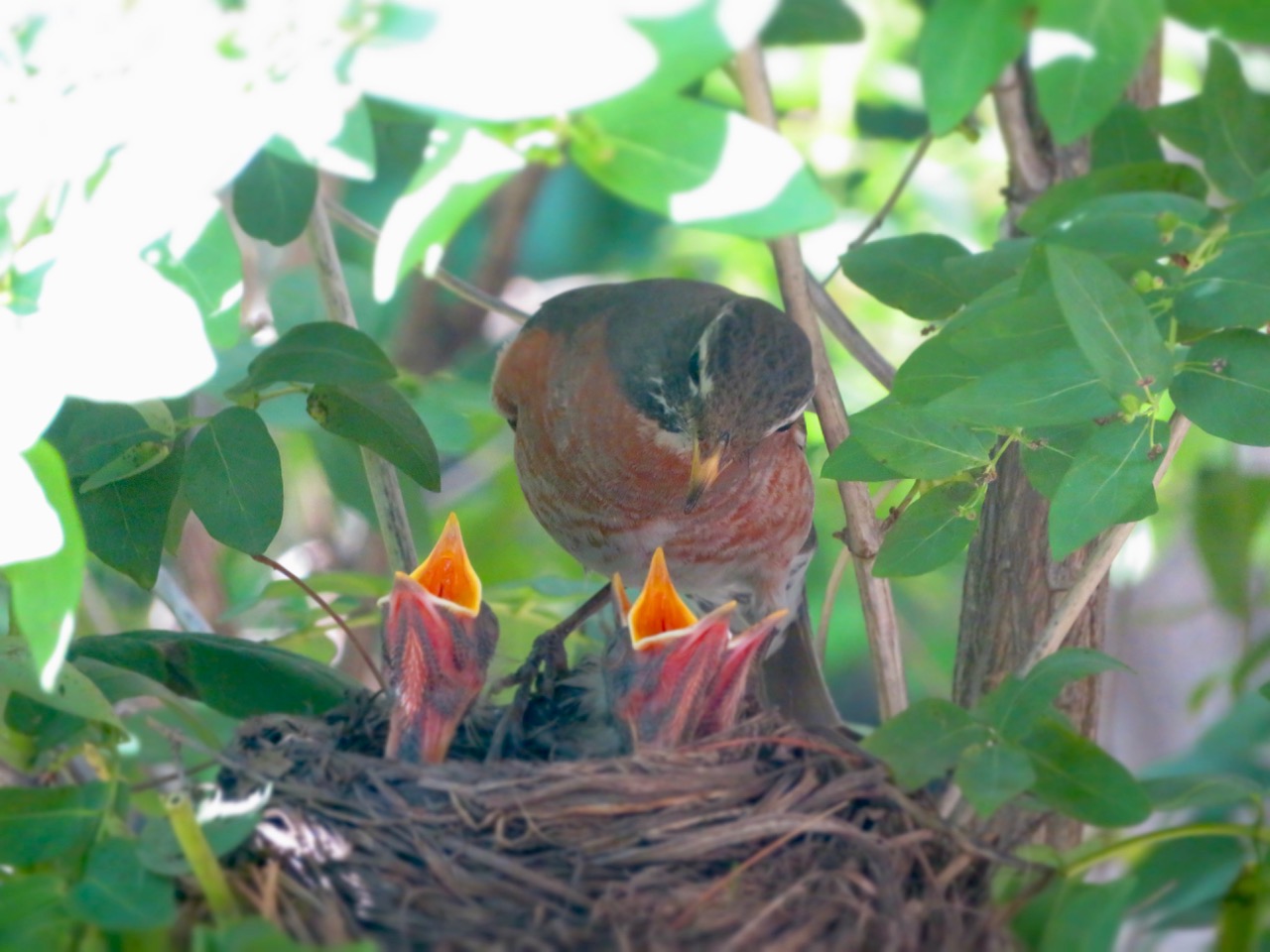
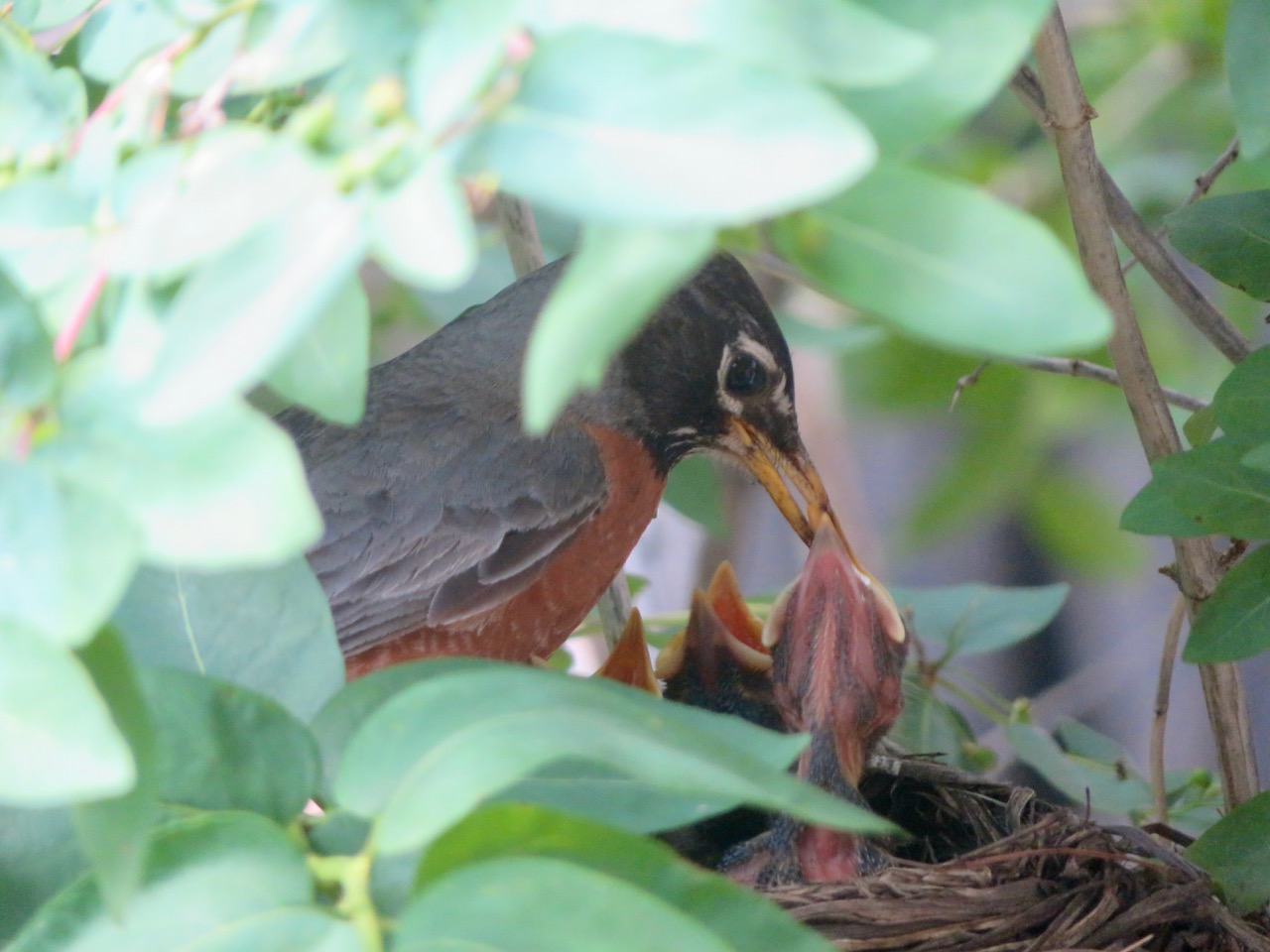
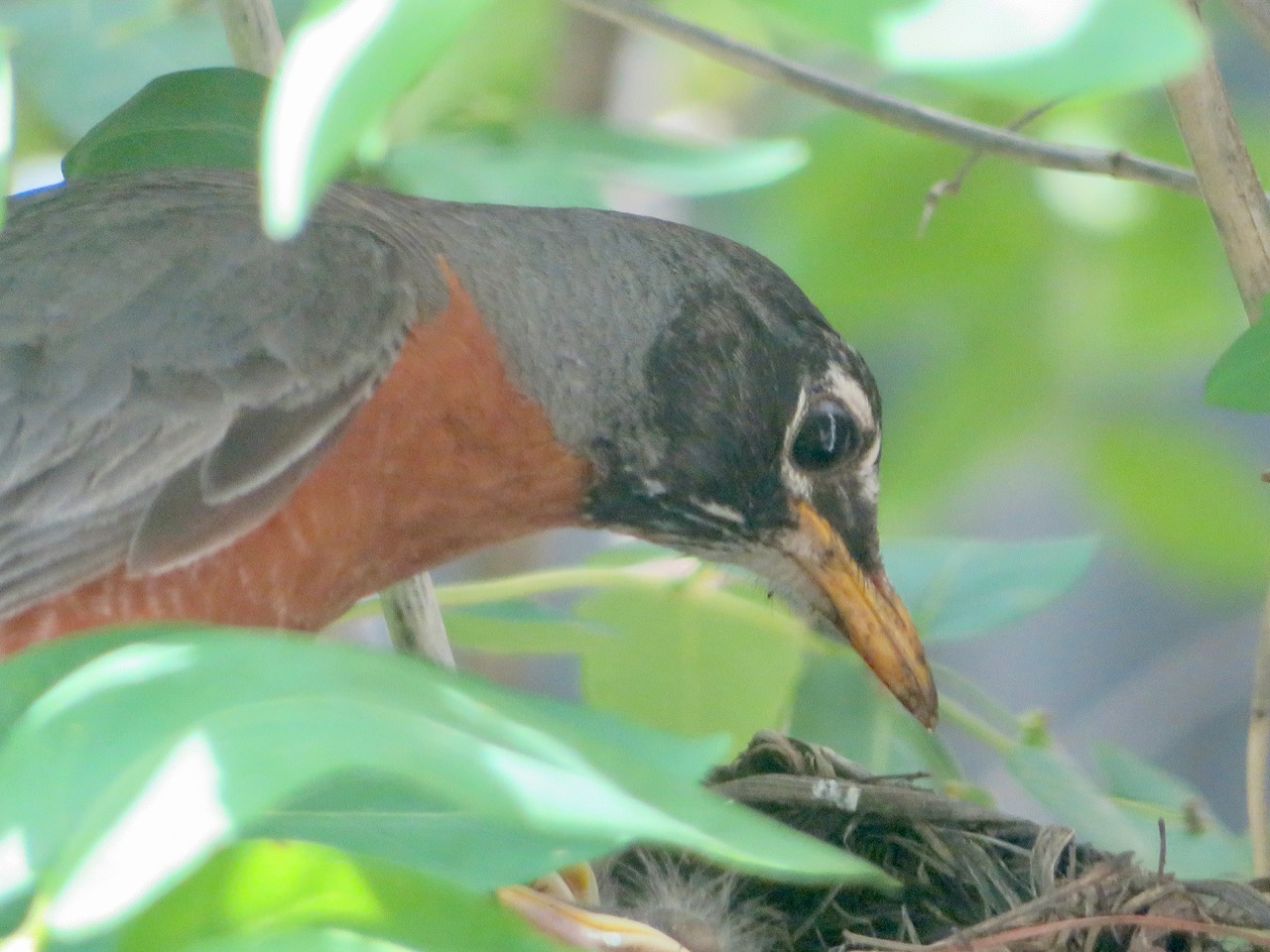
Not a hint of impatience from the Mama through all of this. Her young are helpless . . . so totally dependent upon the warmth of her body and her efforts to secure food. Their hunger seems incessant. (Here, the father comes in, too…the quiet background actor in all of this. We know he is helping procure worms for his offspring and most likely stands guard duty somewhere nearby.)
Such orange caverns, waiting to be filled! As Mama supplies her little ones’ needs, I can see how one of them might fall out as they jostle each other.
They’re never disappointed. Back and forth, back and forth, Mama–or Papa–comes to their rescue. I keep expecting to hear cheeps from the nest, and am sure that day will come, too. But this provides a fuller picture of a robin’s life–lots of WAITING involved, and slow growth, and necessary trust in the overall scheme of things.
These little peeps will open their eyes, and on another momentous day, take their fledgling flights. Observing their parents’ vigilant care at such close range has reminded me of God’s concern for us. Sometimes we feel helpless, too, and weary of having to depend on others for simple everyday needs.
It’s humbling, and at times we get so impatient–which brings up a question.
Do robins have faith?
It surely seems as if they possess an underlying trust. Their steady action shouts, “Everything will work out!”
These little ones will gradually gain their independence and some day care for families of their own. I just hope that year after year, they keep coming back to our courtyard.
(And thank you to Lance for these incredible shots!)
So many of us have recovered from either physical or emotional experiences. And we often need help. This morning, I employed a helper given to me by a sweetheart named Heidi after another surgery.
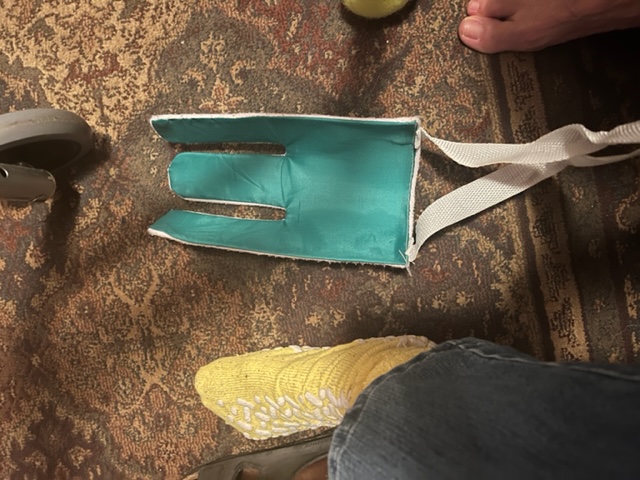
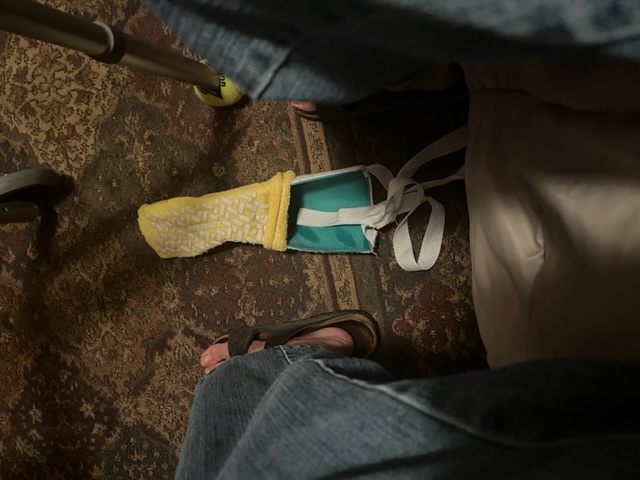
Here it is–loooks simple, yes?
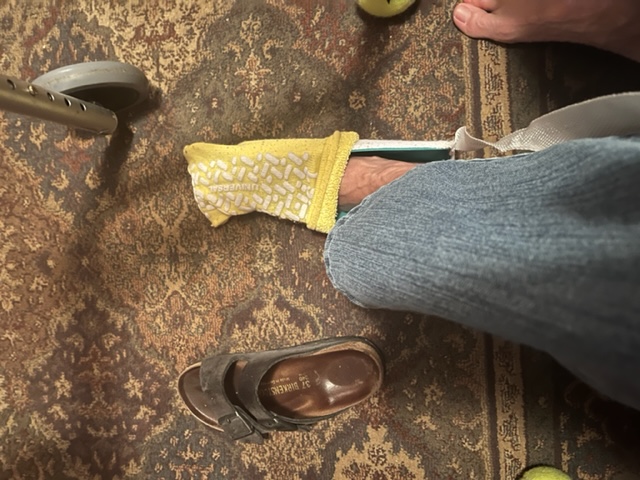
And here’s how this amazing little helper works:
If you can’t reach down to put on a sock, this handy aid bears the load. That white strap coming from the bottom of it is about. You pull on it and voila! Your sock moves onto your foot.
Not rocket science, true, but it really helps me get dressed. Lance did this for me at first, but it’s nice to have found this puller–onner and feel a little more independent.
As a prophet of old once quipped, “Who has despised the day of small things?”
Small things make such a big difference.
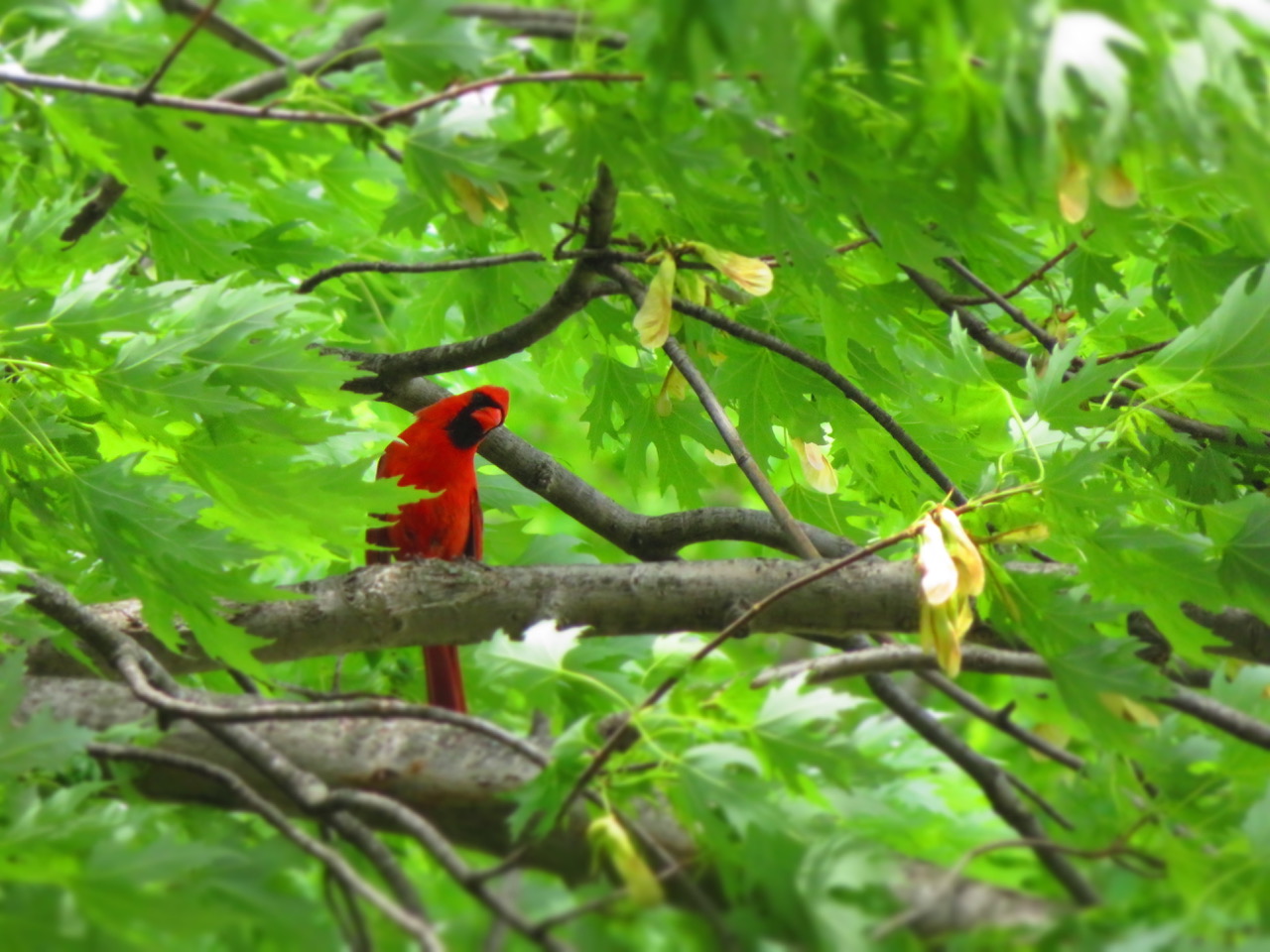
A patch of ajuga outside our back door brightens my day. So does this cardinal’s song–he’s about the happiest bird I can imagine.
Makes me think of the simple glories of the natural world that encouraged Everett and William in Land That I Love. When they first came to their new home in Loyal Valley, Texas, century-old stonework and wonderful shade and fruit trees planted by early pioneers greeted them.
What small things make a big difference in your season of life right now?
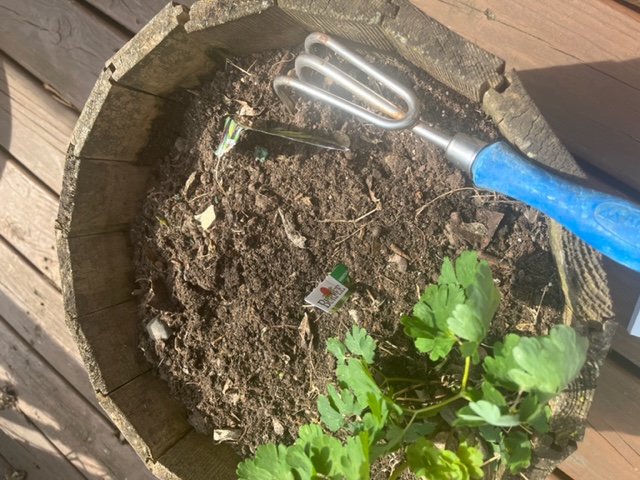
This photo may not prove too inspiring. But it is to me.
Today I sat out in the sun (suddenly it’s HOT and sultry in Iowa), and was able to do a stitch of planting. Nothing like I’d normally be doing, but the same satisfying sensation filled me at having shaken some Mesclun and spinach seeds into this pot and sifted soil over them.
What exactly is this feeling? Something like hope, I think. Very small deposits can result in huge outcomes. I admit, it’s been tough at times lately not to lag in hope. Being injured brings a barrel of side-effects with it, not all physical.
Oh, we all know the promises . . . we memorized them long ago. But during times like this, we need those promises to energize our faith. The night before my surgery, something like this occurred, and I cherish this memory.
A night nurse said, “Wow, you’ve had a bad year.”
My instant reaction? “Well, actually a lot of really good things have happened to me this year.”
“Oh, really?”
So true. It’s been quite the eventful twelve months in our lives, and I clung to those manifestations of GOOD during the painful interval before the surgeons worked their magic on my broken bone.
Right there with me–holding me close–God whispered, “If I could accomplish those things, then I can take care of you now. Peace.”
And peace came. These golden moments we’re given mean everything. The times we’ve witnessed broken relationships mended, the times we’ve watched a loved one struggle and come through the battle whole . . . these amount to golden moments.
They plant seeds of faith in us to nurture. As William Samuel Johnson wrote long ago, To improve the golden moment of opportunity, and catch the good that is within our reach, is the great art of life.
In our characters’ lives and in our own, it behooves us to pay attention to the golden moments.
The sense of “a remedy, cure,” now obsolete, comes from the mid-Fourteenth century, from the verb mend. The meaning “act of mending; a repaired hole or rip in fabric” is from 1888. The phrase on the mend, or “on the path to recovering from sickness, improving in condition” is attested by 1802.
To be on the mend is a good thing. That’s what I know.
To be at home, even though Lance has to do all of the dirty work.
Yesterday we made it up the front steps, but it wasn’t pretty. I’d practiced with my forward-thinking, thorough physical therapists, but facing our front porch on a drizzly day, nothing seemed to compute. That’s where Lance came in, and reaching the porch floor with him lifting from behind at each step became a victory.
Small victories count at times like these. And so does each gift.
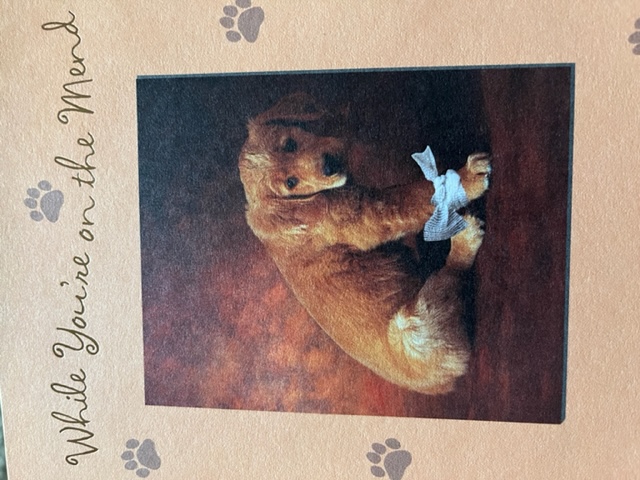
Iowans bring ailing folks food–it’s what we do, and I’m so grateful. Cards, too, supply food for thought. Isn’t it cool how the makers of this one (American Greetings) placed the bow? And the look on this poor doggy’s face . . . I’m posting this for all my dog-loving family and friends out there.
Another gift has arrived during the past few days. I always welcome a new character showing up, and what a kind soul this one is. He’s all about helping others mend.
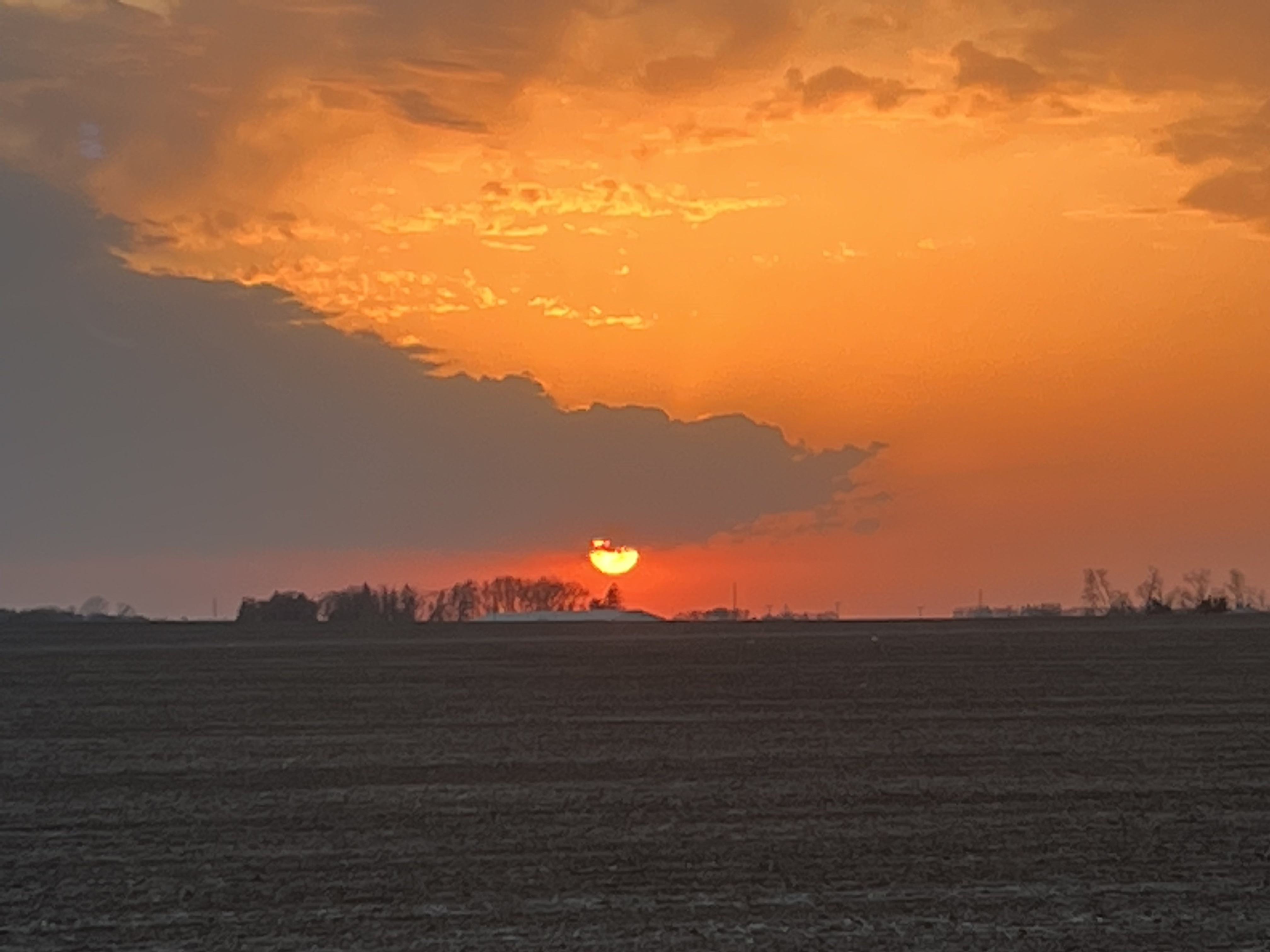
Jane Kirkpatrick, a favorite author of mine, shared these thoughts in her newsletter this month. This photo Lance took of an incredible Iowa sunset as he drove home from visiting me seems to fit the concept Jane addresses.
I too, have experienced some signs of God’s steadfast love through the situation I’m in right now. They don’t have to be huge…what we often call God-winks.
Adapted from Jane Kirkpatrick:
Theologian Frederick Buechner tells the story of a time when he was most discouraged, maybe even despairing, certainly his faith was on a cliff’s edge. His daughter was gravely ill. He was going through other challenges and he’d taken a drive on a rural road and pulled over at a crossroads to pray.
“Give me a word,” he asked. “Some sort of sign that I can hang onto.” After a time, through his tears, he saw a car coming at a great distance. As it came closer and then passed him by he could see the license plate. It was one word. “TRUST.” He held that word to be his sign and let it guide him through the uncertainty and pain. And so it did. Years later he shared that story and a man in the audience came up later to tell him he had been the driver of that car. He worked for a securities and trust company.
It didn’t matter that the “trust” word that helped lift Buechner from his despair wasn’t about faith but about banking. It was the word that Buechner needed to see at that moment. I hadn’t been thinking about a word or a sign when I entered the room where (my husband) was hospitalized for a serious infection. But someone had left a sign beneath the board listing the doctor’s and charge nurses’ names.
“Everything is going to be ok.” I like that.
Did it mean things wouldn’t get rougher? Did it mean treatment would take care of his infection? We weren’t sure, and he ended up having surgery last week. Still, we hang on to that hopeful message.
These linkages may seem a stretch for some, but for me they are gifts of “trust,” small gestures that appear in the universe to remind me that I am not alone, to trust that in the end, everything will be ok.
If it isn’t ok, well, that means it is not the end.
I hope you discover some of these little gifts of confidence in your daily life too, whether you’ve prayed for that word or just paid attention. Perhaps we can take our signs from the ancient mystics like Dame Julian of Norwich who reminds us that “Our Lord did not say, ‘you shall not be tormented, or troubled or grieved, but that ‘you shall not be overcome.’” I’m trusting in that.
Two days ago the Christian History Institute carried the story of how Dostoevsky’s faith formation affected his writings.
Because I’ve been experiencing quite a bit of physical pain this week, this man’s experience stands out to me. He suffered in many ways, from oppression, great loss, and epilepsy in a time when not much help was available.
I haven’t yet been able to write since my accident, but then, I haven’t even tried. I’m sure, though, that what I’ve been feeling will affect my writing…Dostoevsky’s circumstances certainly did.
I learn so much by reading about authors’ lives, and thought I’d share portions of this for anyone else who might be going through a tough time right now, or who has in the past and can see how that affects your work.
I’d love it if you’d share your thoughts in the comments.
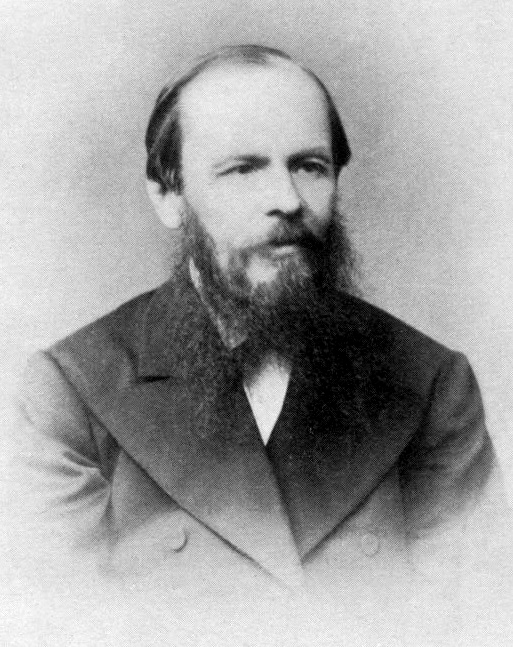
Saturday, April 23 – Christian History Institute/ author Dan Graves, adapted. MURDER, GUILT, UNJUST IMPRISONMENT, AND FAITH FORMED DOSTOEVSKY’S WRITINGS [Above: Fyodor Dostoyevsky in 1876—[public domain] Wikipedia]
In 1839, when Fyodor Dostoevsky was eighteen, Russian serfs murdered his father, Mikhail. Mikhail, an Orthodox Christian and medical doctor, was a harsh and unsympathetic figure who often vented anger and sarcasm at his children and underlings. Apparently serfs reacted violently to one such outburst. No one ever was prosecuted for the crime.
Considering the shock his father’s death gave Dostoevsky, we understand why his writings explore murder and guilt, and true and false religion—and that he aligned himself against serfdom.Dostoevsky completed his first novel, Poor Folk, in 1845. About then he became interested in utopian schemes and networked with socialist intellectuals. In 1847, he joined a group that criticized serfdom and governmental censorship.
Denounced to the Ministry of Internal Affairs, Dostoevsky and his friends were arrested on 23 April 1849 as revolutionaries. After spending months in prison, Dostoevsky was sentenced to death. At the last moment, while the prisoners faced a firing squad, a messenger appeared with a reprieve from the czar. The execution turned out to be a cruel hoax, staged for maximum effect. No wonder Dostoevsky’s writings would sometimes detail the last thoughts of dying men.
Instead of death, Dostoevsky was condemned to four years in a Siberian penal camp. As he was leaving Saint Petersburg in leg irons, three women handed him a Gospel. He kept this under his pillow in prison and read it over and over, underlining passages that focused on persecution of the just and of coming judgment. Living among Russia’s most depraved convicts andsadistic guards, he lost his illusions about mankind’s inherent goodness.
In House of the Dead, he fictionalized some of the horrors he witnessed, and developed the theme of forgiveness. Six years of exile at a military post followed his imprisonment. When he returned to society, his writing showed the deepening impact of years of suffering. In his great novels Crime and Punishment, The Idiot, Demons, and The Brothers Karamazov, protagonists wrestle with conscience and with Christian ideals.
Dostoevsky deplores the emptiness of nihilism and exposes the revolutionaries’ slander and double-dealing, laying bare the human condition. In the background of his novels, often indistinct, are Christ and the cross. In Christianity Dostoevsky saw hope for Russian salvation and had no use for atheism, which he believed would devastate the spirit of the peasants.
Later in life when he and his wife, Anna, lost their beloved son Alyosha, Dostoevsky sought comfort and counsel from Ambrose of Optina, a famous Russian spiritual advisor. During his many trials, Dostoevsky repeatedly turned to Jesus’s words. He rejoiced that as a child his parents brought him up knowing the Bible stories. As he was dying in 1881, he requested that Anna read his favorite Gospel passages aloud.
His epitaph from John 12:24 makes a powerful statement. “Unless a grain of wheat falls to the earth and dies, it remains by itself alone; but if it dies, it bears much fruit.”