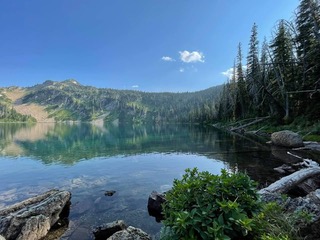
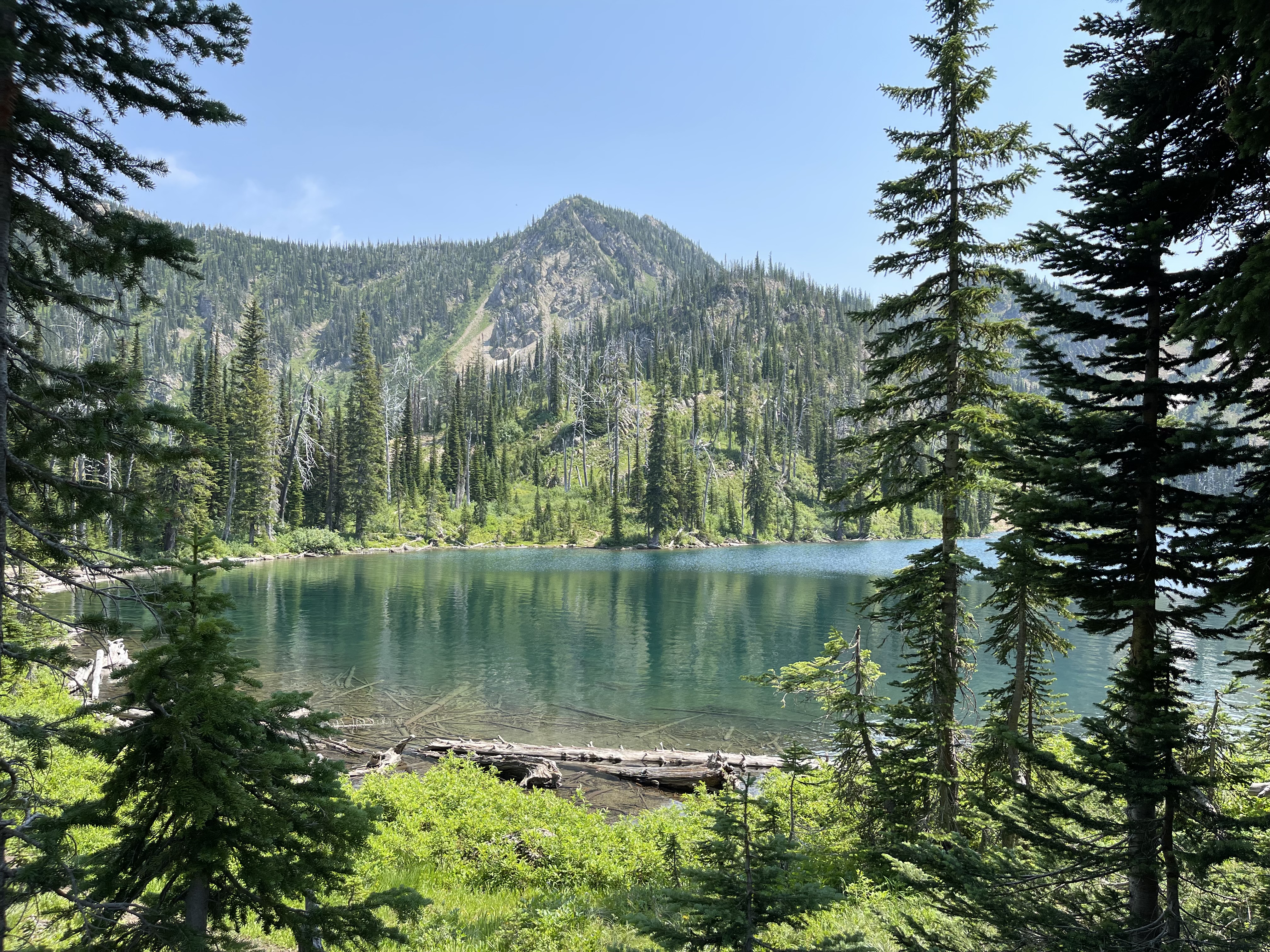
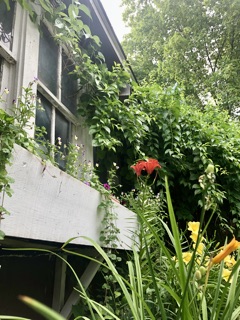
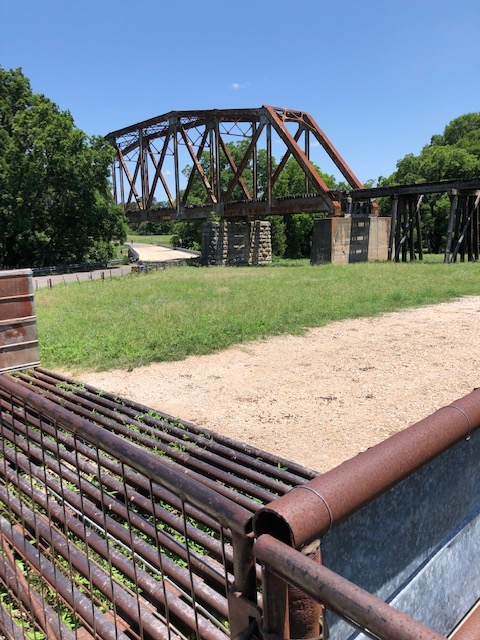
Photos from our youth group trip to gorgeous Montana back country bring all kinds of over-used words to mind: beautiful, breath-taking…
But what about this mountain lake proves so inviting to the eye?
A crystalline sky, forest reflected on the water, a fallen log: all of these play a part. The collective effect helps us smell the pine, almost feel the water between our toes. Lance and I backpacked in this very basin about thirty years ago–incredible views!
This kind of editing keeps me busy right now, just before submitting Land That I Love to my publisher. The goal, to embellish each scene so it engages the reader, keeps me mindful of individual words and phrases, aware of the way each sentence begins and ends, and how paragraphs are organized.
It seems as if this process could continue forever–“I might could work on this manuscript until the cows come home,” as they say in Texas Hill Country.
For this very reason, deadlines are a good thing. Someone outside the process says “It’s time, you’ve done the best you can.”
Our granddaughter had to get WAY DOWN LOW for this photo to work:
Here, she shot what we normally see, as well as the view looking up:
In researching Land That I Love, I’ve had to get way down, too.
Way down into German American history in the state of Texas. Way down into human skills of surviving loss and rising above bitterness. Way down into the beauty of nature and how it frosts our lives with joy.
From cottage garden lore to the history of Nottinghamshire, to World War II and how it affected American and British citizens even in remote locales, to learning spelling in a one-room Texas Hill Country schoolhouse- Land That I Love offers all these.
Coming in late August to a purchase site near you!
Leaving Fredericksburg, we followed the route early settlers took to find their new homes. A lovely expanse of live oak and pecan trees meets the eye just over the Padernales River, and this is where John Meusebach paused. He had relinquished his royal status back in Germany to emigrate, and accepted the responsibility of seeing many other immigrants to this new land.
“This is it!”
His pulse must have raced at the beauty surrounding him. Perhaps his horse snorted in agreement. Here, a fertile land awaited them–the kind of place where a man could provide for his family.
In 1938, the railroad had come as far as Llano County, but not into Mason County and Loyal Valley. By then, this little town had gone through a name change–earlier known as Cold Water Springs, it became Loyal Valley in the 1860s, as an expression of German settlers’ loyalty to the Union, even though Texas had joined the Confederacy.
Everett, his butler/friend William, and Donnie, a lad of three, rode over this trestle still visible in the countryside. (Thanks to my author friend Lynn, who had spotted it previously.) Farther on, the train used a tunnel now filled with bats, since in the early 1940s, the military dismantled the tracks and used them for the war effort.
With the help of a local woman, we located the former depot and got a feel for the spot where Everett and his family disembarked for the trip to Loyal Valley. After crossing the Atlantic, searching out a suitable property while staying with a friend in New York, and traveling all the way down to the Hill Country, they were more than ready for their new home.
If they hadn’t been able to move in, Loyal Valley offered rooms at this hotel, still standing today.
Plots and paths can be anfractuous. They twist and turn but do not break (the English word comes ultimately from the Latin verb frangere, meaning “to break.”) Fracture, fraction, fragment, and frail all stem from Frangere. But one of the steps between frangere and anfractuous is the Latin anfractus, meaning “coil, bend.” The prefix an- here means “around.”
At first, anfractuous was used to describe our ears and the auditory canal’s curves. In modern times, we speak of an anfractuous thought process or an anfractuous shoreline. With summer yarrow in full bloom, we might quip, “Oh those anfractuous blossoms that defy description!”
The novel I’m writing could be called anfractuous. Most plots wind around until they reach their conclusion, and I don’t often know the end when I begin. But this time–let’s just say I thought this story was finished about a month ago. And then. . . . well, I discovered a few more twists to make before we could write THE END.
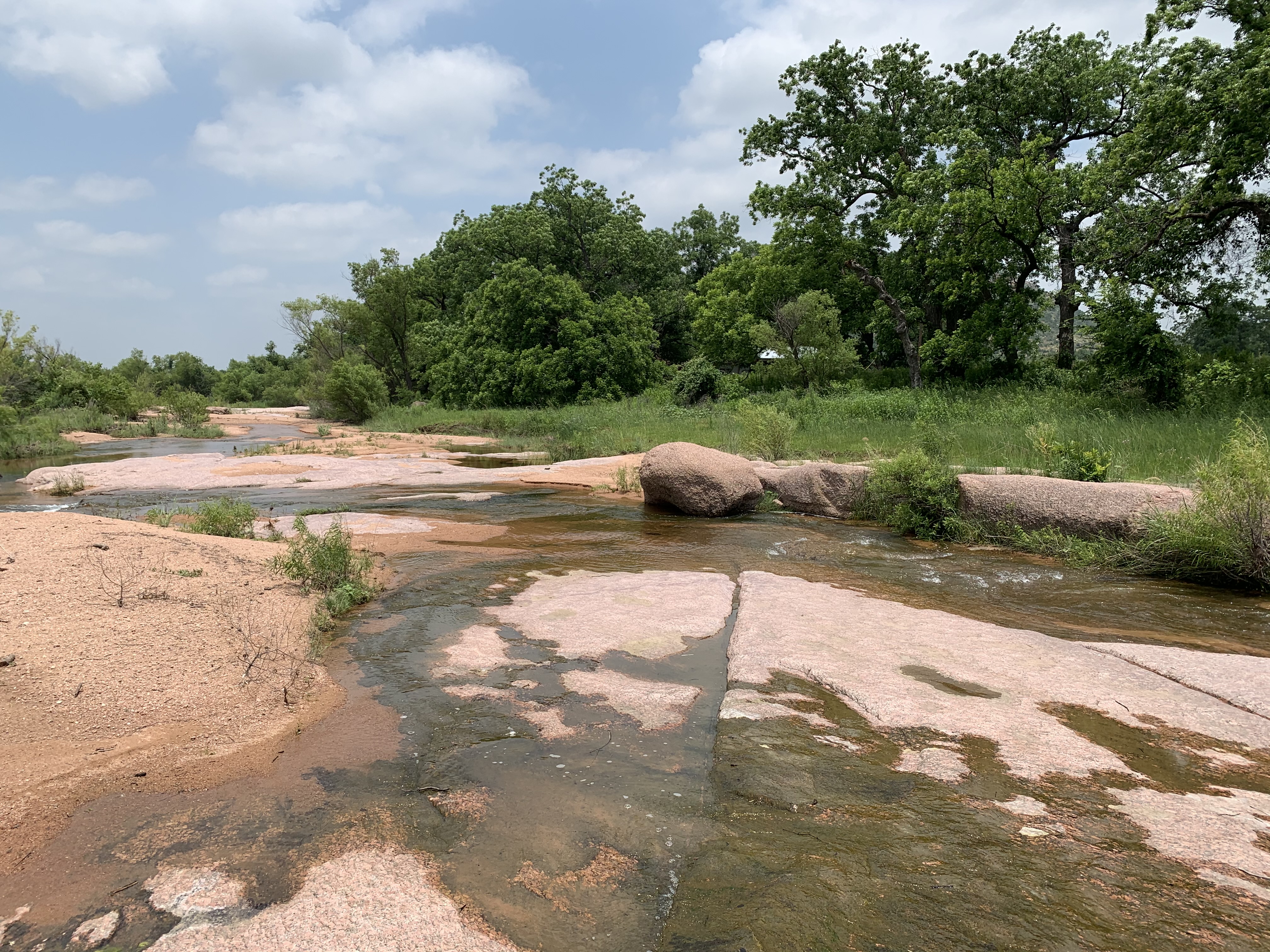
Enjoy some photos from the ghost town called Loyal Valley, the setting for this story. Above is Hickory Creek, ear Stone Mountain, a gargantuan granite escarpment near the town. Our rancher guide told tales of climbing up there in his youth–his angel was definitely on duty!
John Muesebach, a German immigrant in the 1840’s, named Loyal Valley Cold Springs at first, but changed the name during the Civil War to prove the community’s patriotism to the Union. I wish I could be a travel-time mouse and view the gardens this industrious American planted–everything from peaches to olive trees. He definitely had a gift for growing.
I fell in love with the name LOYAL VALLEY right from the start and began to discover how much this little spot in Texas Hill Country certainly has to teach us.
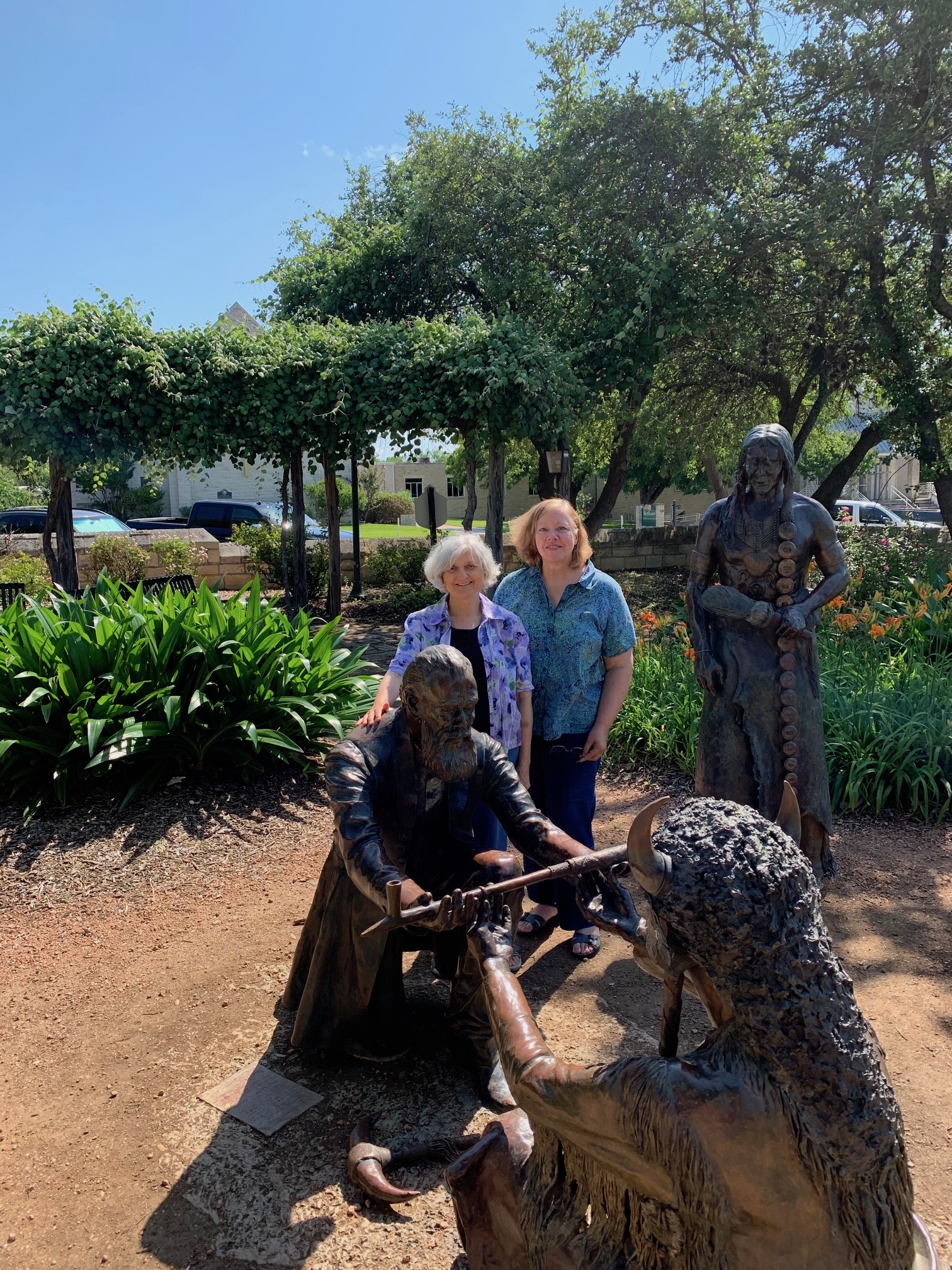
Here, Lynn Dean and I pose with John’s statue as he makes peace with the warring Comanches of the area. In this highly significant act, he opened up a whole new world for thousands of fellow-immigrants waiting in the wings.
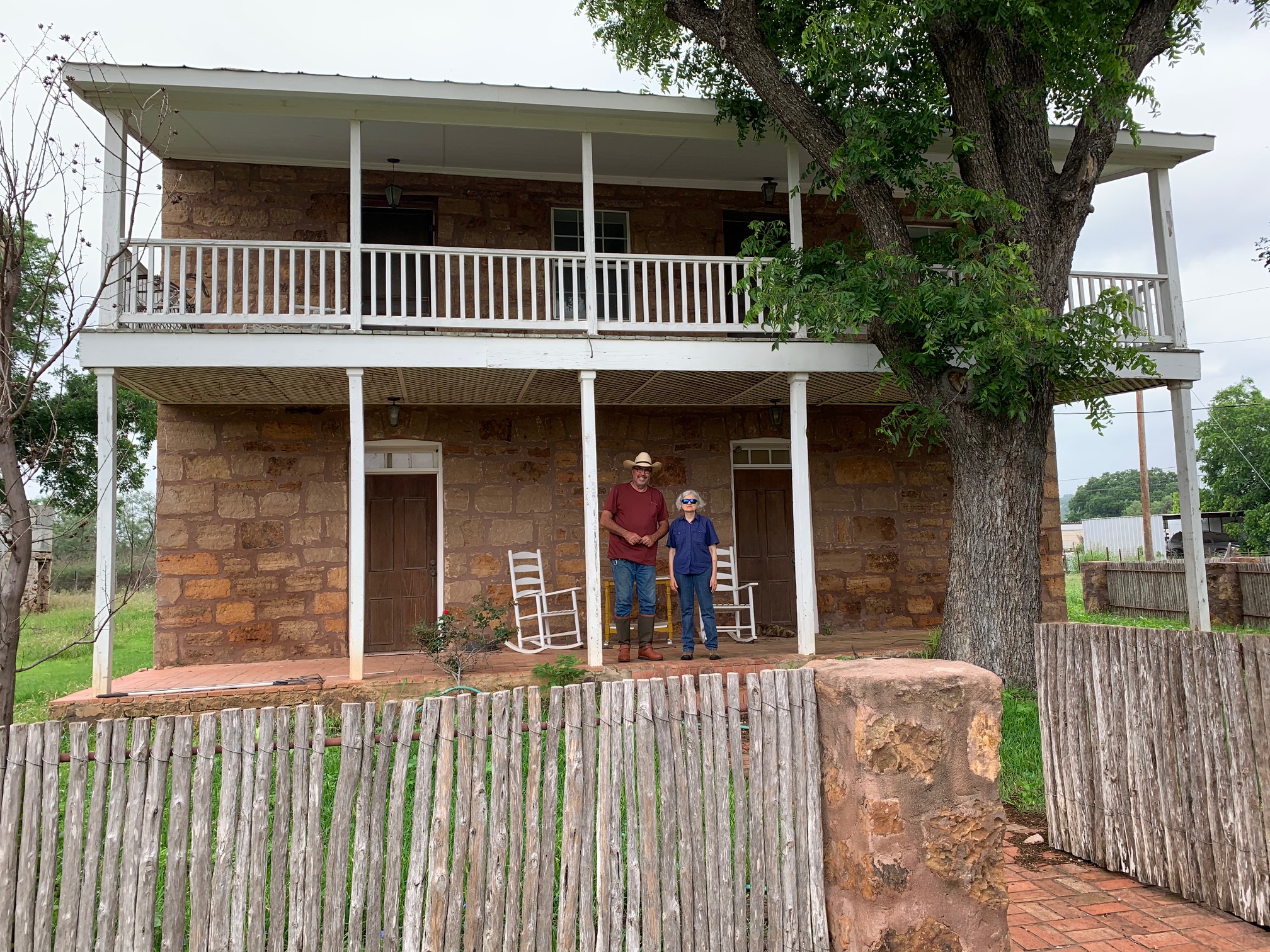
Back in North Iowa after five days in Texas Hill Country, I have photos! I’m very grateful to several people who made my research so easy and intriguing. First of all, Lynn Dean, who drove me around like a professional chauffeur. Here’s a photo of her with John Byerley, whom I cannot thank enough for showing us around Loyal Valley.
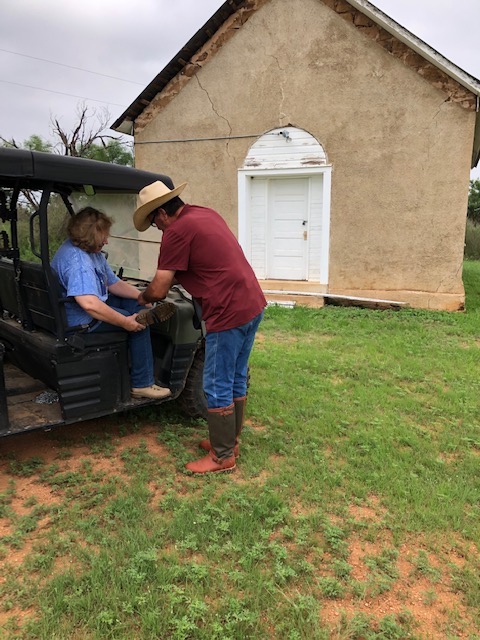
In front of the Loyal Valley Schoolhouse, John is taping the sole of Lynn’s boot.
This one-room schoolhouse, now owned by John, is where Donnie, one of the characters in my novel to be released in early September, went to school during World War II. His father, Everett, brought him to the U.S. along with his butler friend in 1938.
And here is the actual spot where German pioneer immigrant John Meusebach established his home in the mid-1800s, with fruit trees he planted still visible in the background. This incredible pioneer established many communities in the Hill Country, first by forging a treaty with the warring Comanche tribe.
This powerful leader led the way for thousands of immigrants to purchase land and make a living. As Donnie’s father gets to know this country, he realizes how much John Meusebach has to teach him from a century earlier.
We visited John’s gravesite, where the engraved logo, Tenax Propositi, declares what was required of these intrepid early settlers. Tenacious of Purpose. His life testifies to the incredible difference one person’s courage and fortitude can make.
This week, Ben Fox highlights his vision for his remarkable new site. I’m excited about this venture, and think you will be, too. Ben invites readers to send him feedback and ideas at ben@shepherd.com
I love to read and I love wandering through my local bookstore. Nothing can replace the pleasure I get from that experience. That said, I want to try to build something like that but for the online world and help readers discover books in a new way while helping authors meet more readers.
Shepherd is my attempt to try to find new ways to discover amazing books. I ask authors and experts to recommend 5 books on a topic they know well. Alongside that list, I introduce readers to the author and their book.
This is a win-win situation where readers can find amazing books and authors get to introduce their book to more readers.
For many years I’ve been wanting to do something to promote books and reading. I started working on the project full-time in December 2020, with no background in publishing. But I am a long-time tech entrepreneur. I think that brings a fresh perspective to this industry and I am hopeful I can bring some value to readers and authors.
I bought the domain Shepherd.com many years ago. I wasn’t sure what I was going to use it for, but when building this project I felt the domain name was a perfect match for this project. It matches the goal of shepherding readers to pastures full of amazing books.
In addition to myself, I work with a freelance developer in Berlin and a designer in Serbia on a part-time basis. For the April launch of Shepherd, I manually created data entries for 400+ book recommendation lists, 2,340 books, and 2,457 author profiles. I should have some help soon to speed that up, and along with the developer, have built a really great system to improve the process.
There is a growing trend in publishing that authors have to become their own marketing team. This concerns me because it takes time away from writing and is very difficult to do. I have decades of experience with online marketing, which it is not easy to learn and requires daily investment.
One of my long-term goals with Shepherd is to make it easier for authors to market themselves and figure out how I can help. To start, I ask authors to recommend 5 books on a subject they are passionate about and we feature one of their books alongside that list forever. The goal is to help authors meet more readers interested in that topic and sell more books.
This is just the start, and we have a lot more coming at Shepherd.
I love to read and books, and stories are one of my favorite things about humanity. I want to see more authors make enough from their writing to do it full time. Partially for the selfish reasons that I love reading and want to read more great books. And, partially because I think the more we share our experiences and perspective with others, the more we create a more understanding world.
We live in a time where social-media algorithms serve only to reinforce our world view. I want Shepherd to play a role in combatting that. A book is one of the best ways to help someone see the world through different eyes. We need a lot more of that right now.
I’ve got a lot planned for Shepherd! Between now and August we will be rolling out a feature to relate book lists to each other to help readers follow their curiosity through the site, full topic pages to help readers find books they are interested in, and a search feature. Plus, a lot of improvements to the front page to help readers find something that interests them.
Visit Ben’s site to find what may become your favorite book!
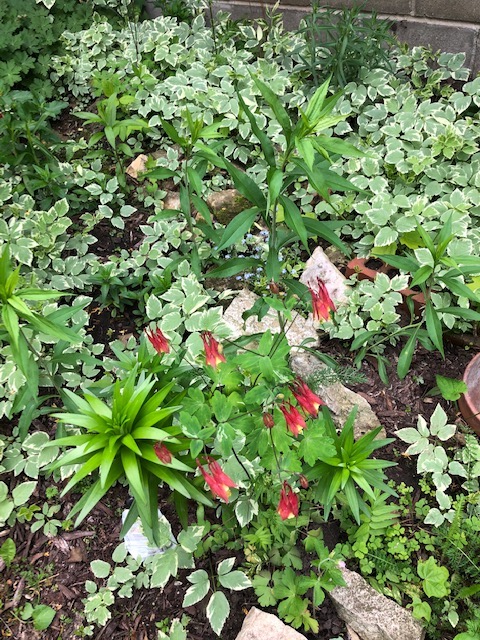
Out back, our “cottage garden,” is aiming to mimic those in England. These botanical gems appear rather scattered, but are, in fact, designed to appeal to the eye like a butterfly flitting from blossom to blossom.
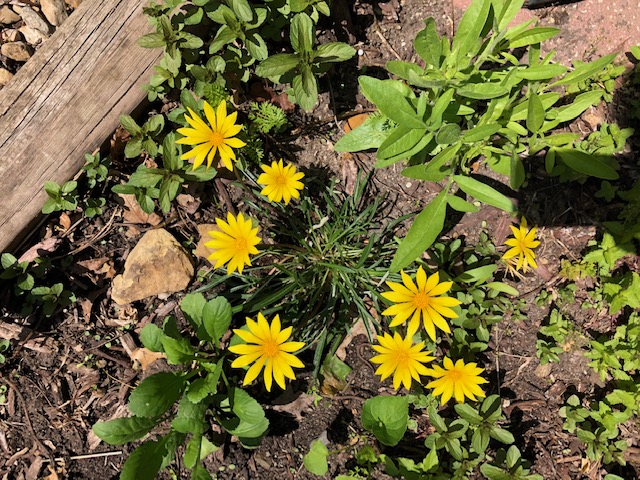
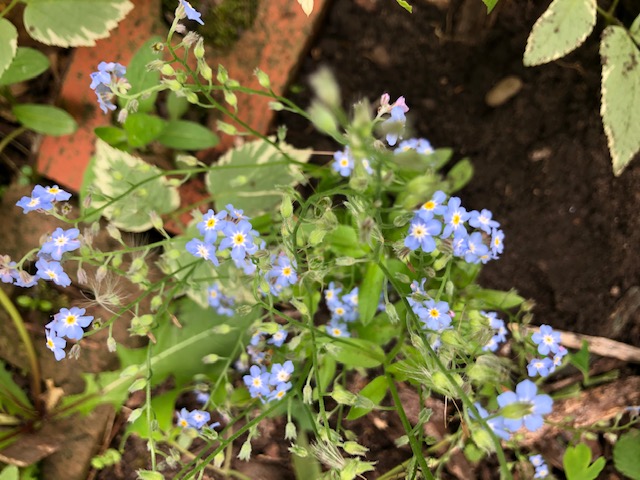
Our early flowers include coreopsis, and behind, barely peeking through, forget-me-nots with their delicate periwinkle hue.
The Romantic poets–think Thomas Hardy and Coleridge–created floral treasures just outside their cottages–hence the name. There, beauty was allowed space to run wild, much like the human imagination.
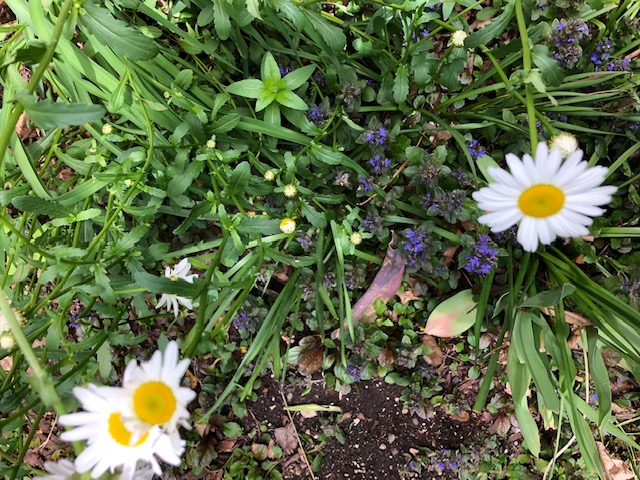
Here, a few of our daisies are blooming against purple stalks of my favorite ground cover, ajuga.
Our garden includes vegetables, and some of our first lettuces added flavor and color to today’s lunch:
The novel I’m working on right now moves from England to Texas Hill Country, and over the next few weeks, I plan to share photos from our courtyard here in Northern Iowa, and then some from those Texas Hills as I embark on a short research trip.
After some severe disappointments, our hero emigrates from his native land in the years before World War II. As he begins a new life, he wonders if the climate of these Texas hills will support a cottage garden.
Well, there’s only one way to find out! RW. Emerson encourages him along the way: “All I have seen teaches me to trust the Creator for all I have not seen.”
Seeing developments in Europe through this British chap’s eyes intrigues me. At the same time, his perspective on developments here in the States, like the Pearl Harbor attack, broadens my understanding of those tumultuous days in our history.
Hope you enjoy the blossoming of our cottage garden and an inside glimpse as this story gradually takes shape.(Yep . . . like a cottage garden!)
Aw, I had to run out for a better shot of those lovely little forget-me-nots!
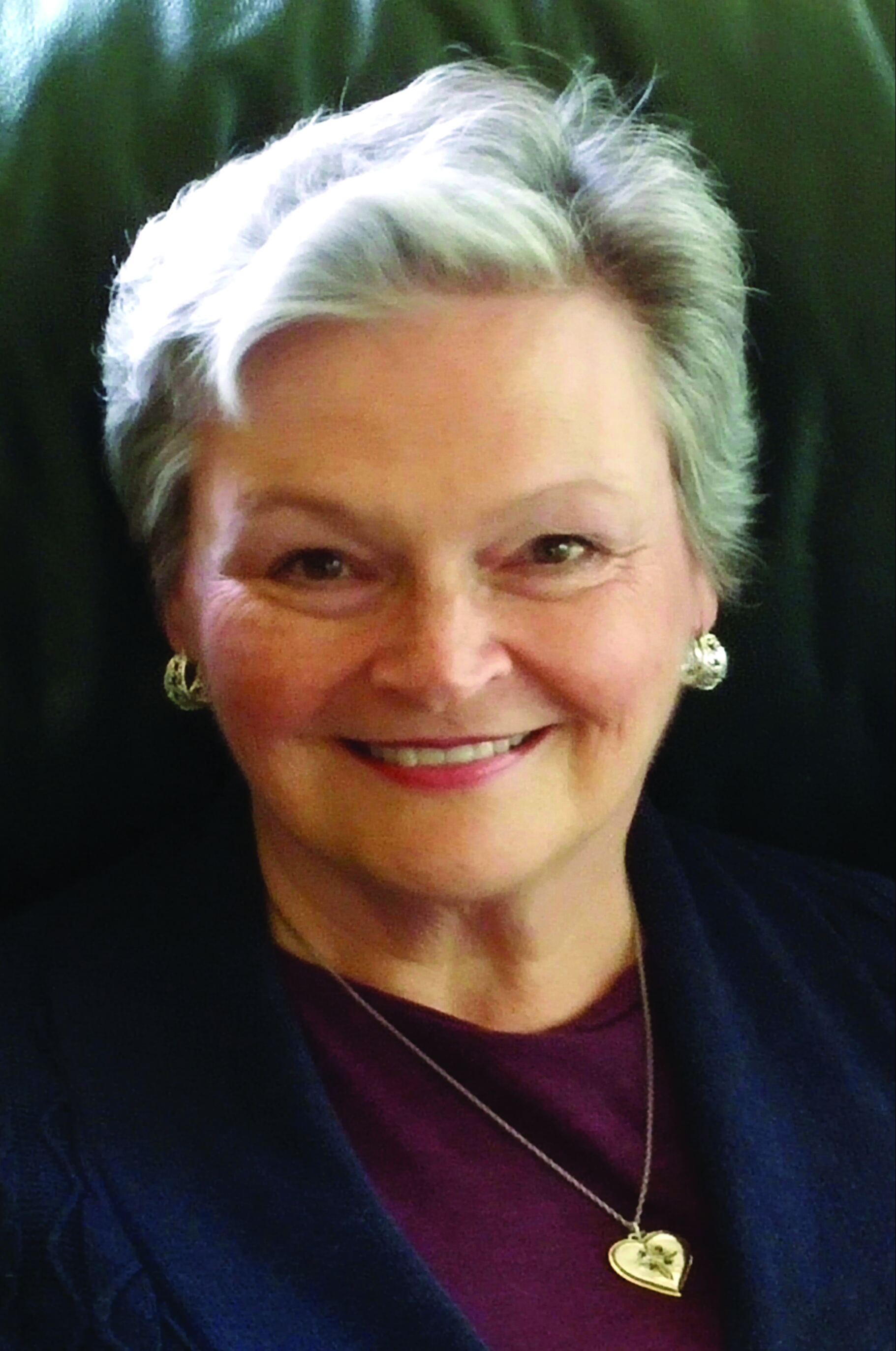
Three-time Christy and two-time Carol and INSPY Award–winning author Cathy Gohlke writes novels steeped with inspirational lessons from history. Her stories reveal how people break the chains that bind them and triumph over adversity through faith. When not traveling to historic sites for research, she and husband, Dan, divide their time between northern Virginia and the Jersey Shore, enjoying time with their grown children and grandchildren.
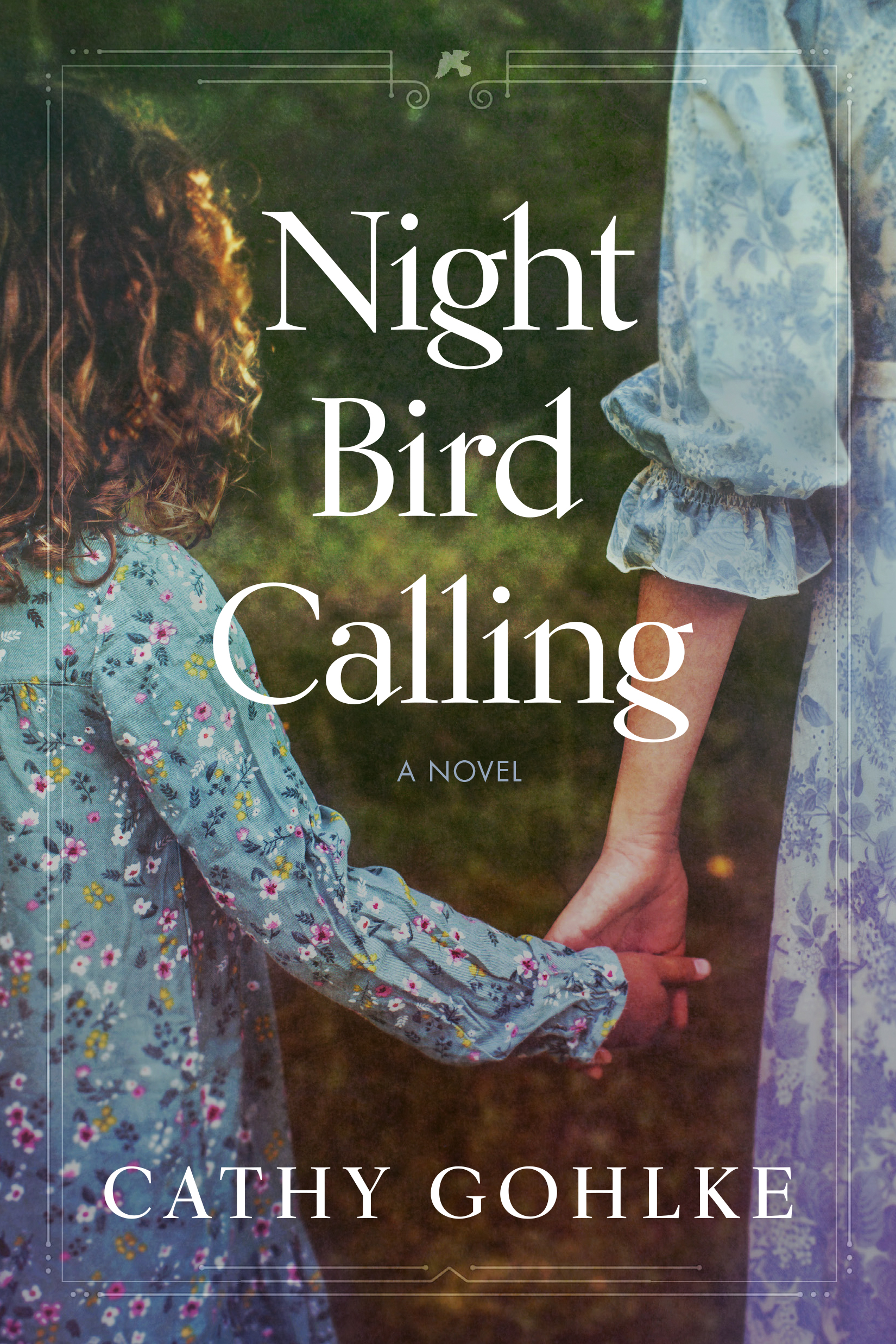
Cathy is giving away a hard copy of Night Bird Calling to one commenter on this blog. And here’s my review of this novel: Religion can cause great pain when it’s used to control others, and there’s a vast difference between this kind of travesty and true spirituality. The author has the courage to go behind the scenes with abuses kept hidden in other eras, but also shows how healing results through honesty and faith.
What inspired you to write Night Bird Calling?
Years ago I wrote a number of short stories based on some quirky characters in a fictional North Carolina foothills town called No Creek. I loved those characters, but in order to create a novel I needed an outside character who could see both strengths and foibles in my town folk and still care about them, still want to become part of their community, and who could tie their stories together.
For many years I’ve also wrestled with the idea of writing about the racial divide and abuse I saw growing up during years of the civil rights movement in the South, as well as domestic abuse and church oppression, things I experienced in my youth and young womanhood. Night Bird Calling is the marriage of all those experiences and stories.
Night Bird Calling involves some very challenging topics like domestic abuse, racism, and church abuse. What motivated you to write on these topics? I grew up mostly in the South during years of the civil rights movement, where I witnessed segregation, desegregation, racial oppression, and abuse but also heroic stands against injustice and some hard-won changes. I learned that attitudes do not change just because laws change. Transformation of the heart is also needed.
That is as true today as it was then. As a young woman, I ran away from an abusive marriage and an oppressive church. My journey toward emotional and spiritual healing took many years. I want women in similar situations to know that they are not alone, that God loves them so very dearly and that the condemnations of their oppressors do not come from Him.
I wrote Night Bird Calling not only for victims of abuse, but in the hope that readers might gain insight, sympathy, and empathy for those who’ve been abused or pushed down, that they might better understand and see creative ways they can help, ways they can be a voice for the voiceless or those needing someone to walk alongside them.
Visit website at cathygohlke.com and Facebook at CathyGohlkeBooks.
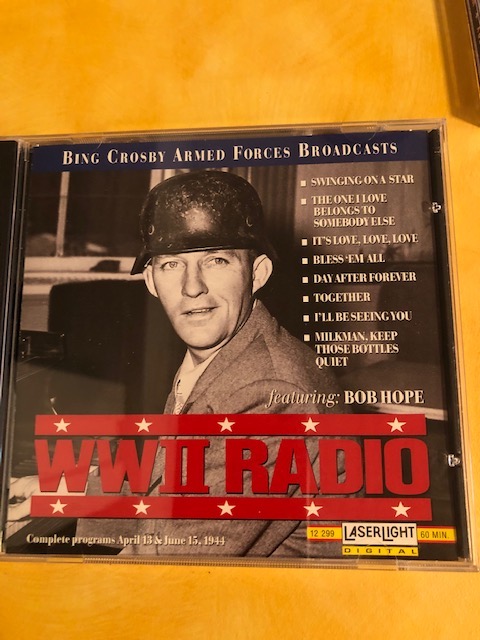
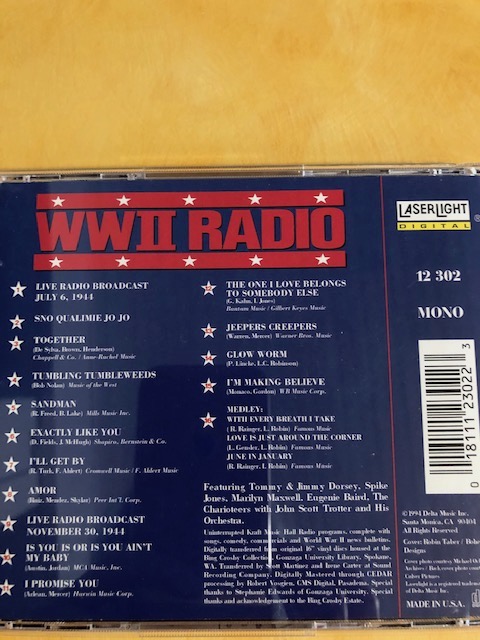
I’ve been having fun listening to CDs of World War II broadcasts to the Armed Forces. The Armed Forces Radio Services was formally established on May 26, 1942.
Initially AFRS programming included transcribed commercial network radio shows such as the Kraft Music Hour without the commercials.
Soon numerous original AFRS programs such as Mail Call were added. Famous crooners (mostly Bing Crosby) and musicians (Tommy and Jimmy Dorsey, Duke Ellington) regaled their audiences with songs, dialogue, and jokes.
So much to learn about the “trivia” of the era . . . what new products were being advertised, and even how many ration points they would cost the buyer.